It’s Not That You Can’t, It’s Just That You Haven’t Yet
Change is hard. Our mindset has a huge impact on how we view the world and our place in it. There are two types of mindsets: a fixed mindset and a growth mindset. Identifying which mindset you fall into can potentially help you in making the changes life inevitably brings feel more bearable.
A Fixed Mindset
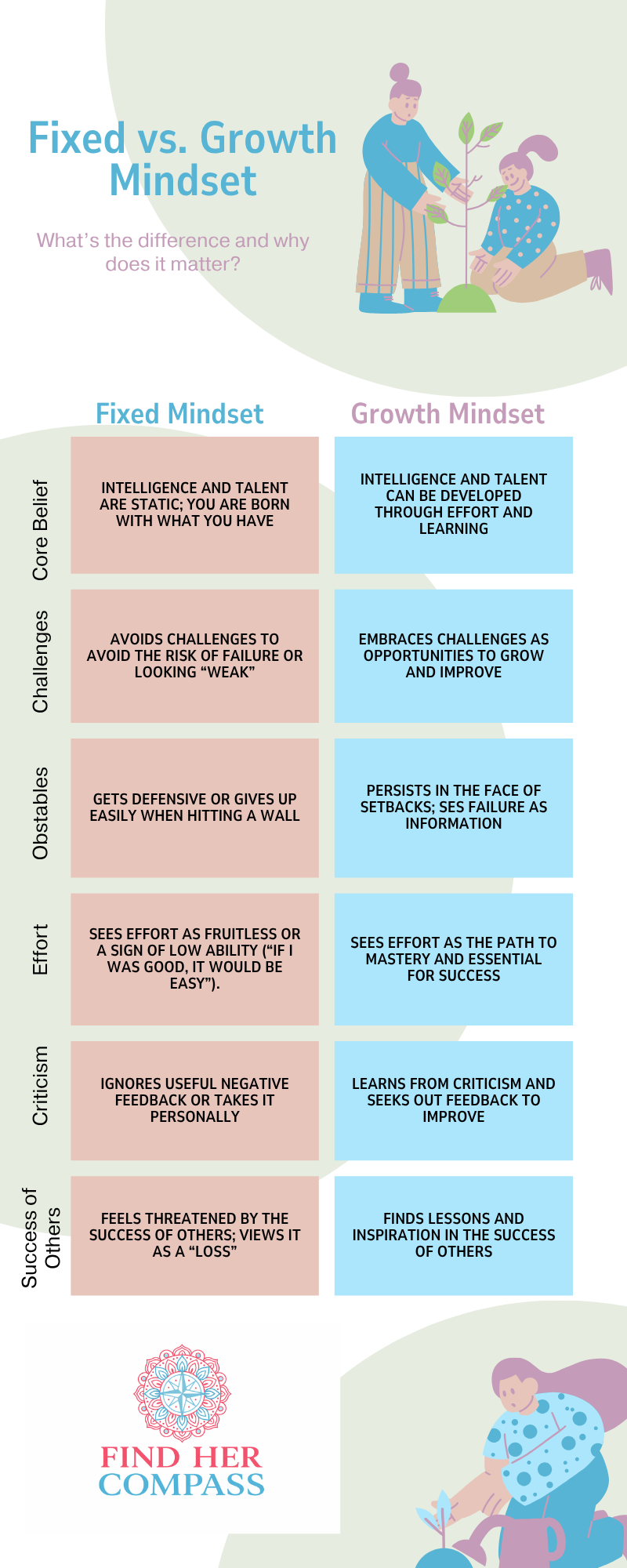
In a “fixed mindset” you believe that your talents, intelligence and abilities are set for life, static. When this is how you look at the world, it often causes you to avoid challenges, feel threatened by others’ successes and take any feedback as personal criticism rather than information to learn from. Due to believing that your intelligence is fixed, you might often try to appear smarter to others without actually putting in effort to learn new knowledge.
A Growth Mindset
In a “growth mindset” you believe that intelligence, skills, and talents are aspects that can be developed. This mindset allows you to have the capacity to take feedback as information rather than criticism, to know that not knowing something is only temporary and to be inspired by others’ successes and ideas. You have an understanding that we can grow our abilities with persistence, strategy and patience. This perspective allows more room for self-compassion and empathy when you try new things.
So now what? What do you do if you are noticing that you have a fixed mindset?
Developing A Growth Mindset
For starters, scientific evidence shows that you create new neural pathways when learning new information. This in itself shows that your brain physically changes with new information. That means you are capable of adapting to new experiences.
Second is to use more positive self-talk. For example if you approach a task and your immediate thought is “I don’t know how to do this, it will never work”, try reminding yourself “I don’t know how to do this yet, but I can find information and ask others in order to figure it out”. You might not believe this more “positive” self-talk at first, but keep trying. Finally, after you’ve tried something new, allow yourself to celebrate your efforts (even if the task isn’t complete or doesn’t turn out how you wanted it to).
Another skill is to actively ask for feedback from others. This can feel vulnerable and scary at times, but remind yourself that any feedback is information. We're often told by society, family, or other figures in our lives that asking for feedback or advice means we are “weak”. This type of thinking keeps us stuck in a fixed mindset. No singular person can hold all of the knowledge there is in the world. Asking others about things you don’t know or that you are trying to get better at can help you feel supported and understood by others.
Finally, remind yourself that you will not get it right on the first try. Sometimes you will, but most of the time you’re going to fail at something new. Failing is another way to look at information. You now know that this approach doesn’t work, and can adjust from there. Learning is a lifelong mission for everyone. Give yourself grace as you move through these items. It can feel difficult to change your mindset, but if you’re intentional with your learning and growth it can have many positive impacts on your perspective.
Comment below areas in which you find yourself feeling stuck in a fixed mindset.